Thursday, June 21, 2018

AP Lit Summer Reading Guidance

If you stumbled on this old site, the new AP Lit summer assignment is here: https://sites.google.com/fifeschools.com/agiddings/classes/ap-lit


Due Date: When I set the due date, we were going to have class on the first day of school. That schedule has changed. So, this assignment is now due on September 10. Be prepared to talk on that day (" you will be asked to share some of the insights you made in re-reading a novel you'd studied in a previous class. You may want a hard copy of your book for this.").


I know it's long. Read the whole thing.


A Few Thoughts
Welcome to AP English Literature and Composition! This is the capstone class of your study of English (reading and writing) at Fife. It will attempt to bring together all that you've learned along the way, celebrating humanity's attempt to describe, explore, and chronicle what it means to be human. Of course, we'll also be prepping our skills for the AP test in May, but I trust that won't get in the way too much.

As in AP English Language and Composition, we will endeavor to reach and master the AP College Board standards. Those of you who've been in the program your first two years at FHS should be well on your way to doing so already. The summer assignment is simply a means to shake off the summer doldrums and re-sharpen our academic prowess. It's not a test. Don't obsess. Be thoughtful, but don't obsess.

Summer Assignment
Step one: read good books*
  • Re-read GatsbyHuck Finn, or a book you read for Pre-AP: Mockingbird, Great Expectations, Macbeth, Old Man and the Sea, Kite Runner/Power of One, or Lord of the Flies (This is the easiest book you read sophomore year and isn't as useful on the AP Lit exam. 
  • Read one other book of literary merit. I suggest one from this list of books used on question 3 of the AP Lit exam. The books we read in class this year will be taken from that list as well. If you happen to pick one we will read, no harm done. If you'd rather read something we won't, this is the likely list (subject to adjustment, and it is highly likely we won't get to all of these): The CrucibleHamletHeart of Darkness, Midsummer Night's DreamThe Scarlet LetterFrankensteinTheir Eyes Were Watching God, Things Fall ApartPride and PrejudiceOryx & CrakeDeath of a Salesman, Who's Afraid of Virginia Woolf, and 1984 or Brave New World. (If you're buying ahead of time, the books in bold type are the ones we actually got to last year. A Handmaid's Tale may be substituted for Oryx & Crake in the novel project this coming year, but after the class feedback, I think we'll stay with the current list.
Aside: I'm reading A Handmaid's Tale again right now -- it's been years -- and it's really interesting/disturbing. There's a series on Hulu, but I'm waiting to finish the book before I start it. It's only shown up on the exam twice, but it might be an interesting read if you like dystopias. It also fits in well with the issues surrounding women in the health care debate if you follow politics.
Step two: a) informally journal about the books as you read them, and b) write a more formal analysis piece (300 words +) about each book once you finish reading it.

Further details on step two: annotate in the margins, open yourself to the ideas of the book and elaborate on them in your own reading journals. If you would like more formal writing practice, try to break down a few of the key devices the author uses (symbolism, imagery, dialog, foreshadowing, narrative structure, etc) to convey certain themes (unrequited love, the inexorable passage of time, the simultaneous beauty and ugliness of human existence, etc). 
Don't stress about the details of "What does he want? Oh my gosh, what am I supposed to write? What does he mean when he says to write about the books?!" Just start a conversation with the book. Pretend the book is your buddy and you have some questions to ask it and comments to make to it. Nothing formal is required, but try not to be boring and waste everyone's time by making this writing portion busywork. Be evocative. If you'd like, you can be creative. You can "interview" one of the characters and make up the responses yourself. Write a poem inspired by the book and write about the connections you made. Ask yourself through writing why you chose this book and what you think of it as a piece of literature. How did the book impact you? What questions do the characters, situations, and themes raise in your mind? Did you like it? If you do not have anything to say in response to these or any other questions, you did not actually read the book. You may have run your eyes over the pages, and even experienced a bit of story, but you didn't read it.**

Further, further details about step two: For the re-read (Gatsby, Huck Finn, Mockingbird, Great Expectations, Macbeth, Old Man and the Sea, Kite Runner/Power of One, or Lord of the Flies), focus your journaling on your new understandings, noticings, and insights into the novel. Literature is greater than just a novel largely because they yield up additional rewards upon repeated reading. This is your opportunity to begin to experience that. This link may also help in reading literature well.

Step three:
  • If you did not take my AP Lang class last year, email a brief introduction of yourself that includes your full name, why you're taking this class, the books you're reading for the summer assignment, and a bit about yourself as a learner to agiddings@fifeschools.com  
  • If you did take my course last year, still write to me (I've missed you!). In your email, talk about why you're taking this course and what you hope to get from it. Talk about how you think you may have grown over this summer as a person and a learner. Also, let me know the books you're reading for the summer assignment. 
  • This email is DUE a week BEFORE school begins. For the calendar-challenged among you (you know who you are) that would be August 30th.
Highly Recommended: If you aren't very familiar with the biblical stories, you might want to take care of that. Biblical allusions are important to much of Western literature, of which we will read a fair bit. The good news is that it's pretty easy to shore that up. I highly recommend reading the books Genesis, Exodus, and one of the first three gospels (Matthew, Mark, or Luke) in the Bible. Some of you may have your favorite translation(s), but we aren't reading the Bible for devotional reasons, but academic ones. It would benefit you most to read those three books in the King James Version (not the New King James) in order to help you pick up the vocabulary and cadences of 16th/17th century language.

Deadline: Wednesday, 5 September 2017 (see the top of the post) bring your journals and your essays on the books to class. On the 2nd or 3rd day of class, you will be asked to share some of the insights you made in re-reading a novel you'd studied in a previous class. You may want a hard copy of your book for this.

Buying Books: Many of you will want to buy your own novels. The first book you should buy is The Compact Bedford Introduction to Literature 8th Edition (ISBN # 978-0-312-47411-9). It's available through Amazon at the link above for very cheap (Starting at $0.49 plus $3.99 shipping!). Also, pick up a copy of The Scarlet Letter. We will begin with that and the school copies are literally falling apart.

We will use this beginning the first week of school, the second at the latest depending on what the first day is like this year (you ASB people probably know already--if it's like last year, maybe Monday of the the second week). This will be where most of our short stories and poetry come from, and maybe one of our plays time permitting. It also has a figurative ton of extra helps and explanations in it that many of you will find very useful. Any questions? Just want to chat about books? About the class? Email agiddings@fifeschools.com
No really, you can email me about (almost) anything you'd like. Fear not young padawan. ;)

See you in September!
As Fitzgerald once wrote,

“Life starts all over again when it gets crisp in the fall.”


* Steps for the summer assignment adapted from my esteemed colleague Ms. Robison.
** Remember not to obsess. I know some of you just thought to yourselves, "Hmmm, I wonder if I should just do all of the suggestions just to be on the safe side." Stop it. Focus, but be thoughtful and just engage with the books.

Saturday, June 24, 2017

AP Lit Summer Reading Guidance

I know it's long. Read the whole thing.

A Few Thoughts
Welcome to AP English Literature and Composition! This is the capstone class of your study of English (reading and writing) at Fife. It will attempt to bring together all that you've learned along the way, celebrating humanity's attempt to describe, explore, and chronicle what it means to be human. Of course, we'll also be prepping our skills for the AP test in May, but I trust that won't get in the way too much.

As in AP English Language and Composition, we will endeavor to reach and master the AP College Board standards. Those of you who've been in the program your first two years at FHS should be well on your way to doing so already. The summer assignment is simply a means to shake off the summer doldrums and re-sharpen our academic prowess. It's not a test. Don't obsess. Be thoughtful, but don't obsess.

Summer Assignment
Step one: read good books*
  • Re-read GatsbyHuck Finn, or a book you read for Pre-AP: Mockingbird, Great Expectations, Macbeth, Old Man and the Sea, Kite Runner/Power of One, or Lord of the Flies
  • Read one other book of literary merit. I suggest one from this list of books used on question 3 of the AP Lit exam. The books we read in class this year will be taken from that list as well. If you happen to pick one we will read, no harm done. If you'd rather read something we won't, this is the likely list (subject to adjustment, and it is highly likely we won't get to all of these): The CrucibleHamletHeart of Darkness, Midsummer Night's DreamThe Scarlet LetterFrankensteinTheir Eyes Were Watching God, Things Fall ApartPride and PrejudiceOryx & CrakeDeath of a Salesman, Who's Afraid of Virginia Woolf, and 1984 or Brave New World. (If you're buying ahead of time, the books in bold type are the ones we actually got to last year. A Handmaid's Tale may be substituted for Oryx & Crake in the novel project this coming year, but after the class feedback, I think we'll stay with the current list.
Aside: I'm reading A Handmaid's Tale again right now -- it's been years -- and it's really interesting/disturbing. There's a series on Hulu, but I'm waiting to finish the book before I start it. It's only shown up on the exam twice, but it might be an interesting read if you like dystopias. It also fits in well with the issues surrounding women in the health care debate if you follow politics.
Step two: a) informally journal about the books as you read them, and b) write a more formal analysis piece (300 words +) about each book once you finish reading it.

Further details on step two: annotate in the margins, open yourself to the ideas of the book and elaborate on them in your own reading journals. If you would like more formal writing practice, try to break down a few of the key devices the author uses (symbolism, imagery, dialog, foreshadowing, narrative structure, etc) to convey certain themes (unrequited love, the inexorable passage of time, the simultaneous beauty and ugliness of human existence, etc). 
Don't stress about the details of "What does he want? Oh my gosh, what am I supposed to write? What does he mean when he says to write about the books?!" Just start a conversation with the book. Pretend the book is your buddy and you have some questions to ask it and comments to make to it. Nothing formal is required, but try not to be boring and waste everyone's time by making this writing portion busywork. Be evocative. If you'd like, you can be creative. You can "interview" one of the characters and make up the responses yourself. Write a poem inspired by the book and write about the connections you made. Ask yourself through writing why you chose this book and what you think of it as a piece of literature. How did the book impact you? What questions do the characters, situations, and themes raise in your mind? Did you like it? If you do not have anything to say in response to these or any other questions, you did not actually read the book. You may have run your eyes over the pages, and even experienced a bit of story, but you didn't read it.**

Further, further details about step two: For the re-read (Gatsby, Huck Finn, Mockingbird, Great Expectations, Macbeth, Old Man and the Sea, Kite Runner/Power of One, or Lord of the Flies), focus your journaling on your new understandings, noticings, and insights into the novel. Literature is greater than just a novel largely because they yield up additional rewards upon repeated reading. This is your opportunity to begin to experience that. This link may also help in reading literature well.

Step three:
  • If you did not take my AP Lang class last year, email a brief introduction of yourself that includes your full name, why you're taking this class, the books you're reading for the summer assignment, and a bit about yourself as a learner to agiddings@fifeschools.com  
  • If you did take my course last year, still write to me (I've missed you!). In your email, talk about why you're taking this course and what you hope to get from it. Talk about how you think you may have grown over this summer as a person and a learner. Also, let me know the books you're reading for the summer assignment. 
  • This email is DUE a week BEFORE school begins. For the calendar-challenged among you (you know who you are) that would be August 30th.
Highly Recommended: If you aren't very familiar with the biblical stories, you might want to take care of that. Biblical allusions are important to much of Western literature, of which we will read a fair bit. The good news is that it's pretty easy to shore that up. I highly recommend reading the books Genesis, Exodus, and one of the first three gospels (Matthew, Mark, or Luke) in the Bible. Some of you may have your favorite translation(s), but we aren't reading the Bible for devotional reasons, but academic ones. It would benefit you most to read those three books in the King James Version (not the New King James) in order to help you pick up the vocabulary and cadences of 16th/17th century language.

Deadline: Wednesday, 6 September 2017 bring your journals and your essays on the books to class. On the 2nd or 3rd day of class, you will be asked to share some of the insights you made in re-reading a novel you'd studied in a previous class. You may want a hard copy of your book for this.

Buying Books: Many of you will want to buy your own novels. The first book you should buy is The Compact Bedford Introduction to Literature 8th Edition (ISBN # 978-0-312-47411-9). It's available through Amazon at the link above for very cheap (Starting at $0.49 plus $3.99 shipping!). Also, pick up a copy of The Scarlet Letter. We will begin with that and the school copies are literally falling apart.

We will use this beginning the first week of school, the second at the latest depending on what the first day is like this year (you ASB people probably know already--if it's like last year, maybe Monday of the the second week). This will be where most of our short stories and poetry come from, and maybe one of our plays time permitting. It also has a figurative ton of extra helps and explanations in it that many of you will find very useful. Any questions? Just want to chat about books? About the class? Email agiddings@fifeschools.com
No really, you can email me about (almost) anything you'd like. Fear not young padawan. ;)

See you in September!
As Fitzgerald once wrote,

“Life starts all over again when it gets crisp in the fall.”


* Steps for the summer assignment adapted from my esteemed colleague Ms. Robison.
** Remember not to obsess. I know some of you just thought to yourselves, "Hmmm, I wonder if I should just do all of the suggestions just to be on the safe side." Stop it. Focus, but be thoughtful and just engage with the books.

Wednesday, October 5, 2016

What dreams may come...

Before we finish with the Scarlet Letter and start Hamlet, we will have a little test. It's not a big test. It's actually more like a quiz. It's so small it's embarrassing that it is for AP Lit, but given the fact you have college essays, a Scarlet Letter essay, and Hamlet about to begin (get your books if you're not checking out from our library), I thought a wee little test would be more appropriate than a BIG test. :)

Format: Choose 5 of 10 provided quotes and discuss (1) who said it (2) when it was said (what was the situation), and (3) what is the significance/meaning/importance to the ENTIRE WORK. Also discuss if the quote relates to character, theme, symbolism, irony, foreshadowing, imagery, etc. 
See. Little. Tiny. Wee. 

Today is Wednesday. Let's Work on essays tomorrow (Thursday). Then let's do the wee itty-bitty quiz/test on Friday. We'll push starting Hamlet back to Monday. But when we start, we're going to really move. Intro. Overview. Get into the text! Soliloquy analyses. Performances? Arguments. Oh boy! :)

Tuesday, September 13, 2016

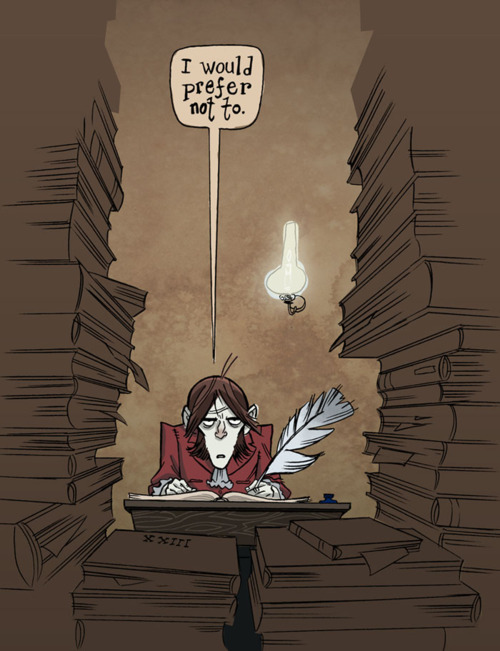
Character and Bartleby, the Scrivener

For class tomorrow, read the character section of the green book, pp 117-122. Then read Bartleby, the Scrivener on pages 124-150.

Here is the character section.
Here is the "short" story. That link was having trouble. If it does again, here it is in pdf.

Wednesday, September 7, 2016

Setting and IND-AFF

Sarajevo, capital of  Bosnia and Herzegovina
(NOT Native American) ;)
Read the Setting section of the green book (pp162-164) and the short story IND-AFF from the same section (pp 171-178).

If you don't have your green book yet, read the selection here courtesy of CamScanner and a too nice Mr. Giddings.

Thursday, June 23, 2016

AP Lit Summer Assignment and Information

A Few Thoughts
Welcome to AP English Literature and Composition! This is the capstone class of your study of English (reading and writing) at Fife. It will attempt to bring together all that you've learned along the way, celebrating humanity's attempt to describe, explore, and chronicle what it means to be human. Of course, we'll also be prepping our skills for the AP test in May, but I trust that won't get in the way too much.

As in AP English Language and Composition, we will endeavor to reach and master the AP College Board standards. Those of you who've been in the program your first two years at FHS should be well on your way to doing so already. The summer assignment is simply a means to shake off the summer doldrums and re-sharpen our academic prowess. It's not a test. Don't obsess. Be thoughtful, but don't obsess.

Summer Assignment
Step one: read good books*
  • Re-read Gatsby, Huck Finn, or a book you read for Pre-AP: Mockingbird, Great Expectations, Macbeth, Old Man and the Sea, Kite Runner/Power of One, or Lord of the Flies
  • Read one other good book. If you need help distinguishing "good books," pick one from this list: http://mseffie.com/AP/APtitles.html. The books we read in class this year will be taken from that list as well. If you happen to pick one we will read, no harm done. If you'd rather read something we won't, this is the likely list (subject to adjustment, and it is highly likely we won't get to all of these): The CrucibleHamletHeart of Darkness, Midsummer Night's DreamThe Scarlet LetterFrankensteinTheir Eyes Were Watching God, Things Fall ApartPride and PrejudiceOryx & CrakeDeath of a Salesman, Who's Afraid of Virginia Woolf, and 1984 or Brave New World. (If you're buying, the books in bold type are the ones we actually got to last year. I'm going to try hard to make sure Frankenstein gets in there too. Oryx & Crake and Pride and Prejudice will be part of our novel project in the spring.)
Step two: a) write about the books as you read them, and b) write a nice substantive piece (300 words +) about each book once you finish reading it.

Further details on step two: annotate in the margins, open yourself to the ideas of the book and elaborate on them in your own reading journals. If you would like more formal writing practice, try to break down a few of the key devices the author uses (symbolism, imagery, dialog, foreshadowing, narrative structure, etc) to convey certain themes (unrequited love, the inexorable passage of time, the simultaneous beauty and ugliness of human existence, etc). Don't stress about the details of "What does he want? Oh my gosh, what am I supposed to write? What does he mean when he says to write about the books?!" Just start a conversation with the book. Pretend the book is your buddy and you have some questions to ask it and comments to make to it. Nothing formal is required, but try not to be boring and waste everyone's time by making this writing portion busywork. Be evocative. If you'd like, you can be creative. You can "interview" one of the characters and make up the responses yourself. Write a poem inspired by the book and write about the connections you made. Ask yourself through writing why you chose this book and what you think of it as a piece of literature. How did the book impact you? What questions do the characters, situations, and themes raise in your mind? Did you like it? If you do not have anything to say in response to these or any other questions, you did not actually read the book. You may have run your eyes over the pages, and even experienced a bit of story, but you didn't read it.**

Further, further details about step two: For the re-read (Gatsby, Huck Finn, Mockingbird, Great Expectations, Macbeth, Old Man and the Sea, Kite Runner/Power of One, or Lord of the Flies), focus your journaling on your new understandings, noticings, and insights into the novel. Literature is greater than just a novel largely because they yield up additional rewards upon repeated reading. This is your opportunity to begin to experience that.

Step three:
  • If you did not take my AP Lang class last year, email a brief introduction of yourself that includes your full name, why you're taking this class, the books you're reading for the summer assignment, and a bit about yourself as a learner to agiddings@fifeschools.com  
  • If you did take my course last year, still write to me (I've missed you!). In your email, talk about why you're taking this course and what you hope to get from it. Talk about how you think you may have grown over this summer as a person and a learner. Also, let me know the books you're reading for the summer assignment. 
  • This email is DUE a week BEFORE school begins. 
Highly Recommended: If you aren't very familiar with the biblical stories, you might want to take care of that. Biblical allusions are important to much of western literature, of which we will read a fair bit. Good news is that it's pretty easy to shore that up. I highly recommend reading the books Genesis, Exodus, and one of the first three gospels (Matthew, Mark, or Luke) in the Bible. Some of you may have your favorite translation(s), but we aren't reading the Bible for devotional reasons, but academic ones. It would benefit you most to read those three books in the King James Version (not the New King James) in order to help you pick up the vocabulary and cadences of 16th/17th century language.

Deadline: Tuesday, 6 September 2016 bring a hard copy of your books and all of your writing on the books to class. On the 3rd or 4th day of class, you will be asked to share some of the insights you made in re-reading a novel you'd studied in a previous class.

Buying Books: Many of you will want to buy your own novels. The first book you should buy is The Compact Bedford Introduction to Literature 8th Edition (ISBN # 978-0-312-47411-9). It's available through Amazon at the link above for very cheap (Starting at $0.01 plus $3.99 shipping!). Also, pick up a copy of The Scarlet Letter ASAP.

We will use this beginning the first week of school, the second at the latest depending on what the first day is like this year (you ASB people probably know already--if it's like last year, maybe Monday of the the second week). This will be where most of our short stories and poetry come from, and maybe one of our plays time permitting. It also has a figurative ton of extra helps and explanations in it that many of you will find very useful. 
Any questions? Just want to chat about books? About the class? Email agiddings@fifeschools.com
No really, you can email me about (almost) anything you'd like. Fear not young padawan. ;)

See you in September!
As Fitzgerald once wrote,

“Life starts all over again when it gets crisp in the fall.”

* Steps for the summer assignment adapted from my esteemed colleague Ms. Robison.
** Remember not to obsess. I know some of you just thought to yourselves, "Hmmm, I wonder if I should just do all of the suggestions just to be on the safe side." Stop it. Focus, but be thoughtful and just engage with the books.
Wednesday, June 1, 2016

Story and Society Presentation


Work in pairs to put together a presentation about a story you care about that examines its relationship to society. To do in your presentation:
  • Tell us about the story. Not everyone will be familiar with the story. Bring us up to speed. Even if we are familiar, your summary will highlight elements of the story you care about.
  • Explain the things in society that the story is responding to in some way.
  • Explain how your story responds to the things you identified in society.
  • Conclude with how this story is important. If it’s been around a long time, why? If it hasn’t, do you think it will? Why?
Share it with each other so you can both edit and share it. Class presentations will begin on the 6th of June. 

Thursday, March 3, 2016

Sweat


Finish reading Sweat and complete the following questions for discussion in class on Monday.

  1. Discuss the meaning of the title from the perspective of the biblical account of Adam and Eve and their expulsion from the Garden of Eden? Does this frame of reference help readers to understand key patterns in the story?
  2. Discuss the symbolic meanings of Sykes’s whip and the snake.
  3. Why is Sykes so abusive towards Delia?
  4. Discuss the role of the men at the store.
  5. Why does Delia not warn Sykes that the rattlesnake is in the bedroom? How do readers reconcile her behavior with the image of her as a good Christian?
  6. What is the effect for the reader of Hurston switching back and forth between the colloquial speech of her characters and standard English (Remember Twain in Huckleberry Finn?)

Thursday, January 7, 2016

To Do Friday

These are as they were written for the sub. It's getting late and I want to go home, so I'm not going to change the voice to fit you as the audience. Perhaps it can be a sneaky object lesson in how a misplaced voice can fall flat. ;)

  • Please take roll
They are discussing in small groups today.

  • First give them 10 minutes to discuss Act 1 Scene 3 lines 56-87
    • Look for tone, famous lines, type of advice. How do these things help characterize Polonius?
  • Then 15-20 minutes to discuss Act 1 Scene 3 lines 1-55 and 90-145
    • How does Laertes treat Ophelia?
    • How does Polonius treat Ophelia?
    • What do Ophelia’s reactions to their advice tell us about her and her character?
    • Debate the question: Is Ophelia a participant or a pawn? Explain and discuss your reasons.
  • For 10 minutes, discuss in what ways the beliefs about ghosts on the board might have influenced their reactions to the ghost and its invitation to Hamlet.
  • Finish up with discussing the allusions and implications of Hamlet’s meeting with the  ghost in scene 5. Did this really happen? Is Hamlet going mad, or is he in his right mind? How can you tell?
  • If they move through this more quickly than planned, they should read Act 2, which is due on Monday.

Friday, December 18, 2015

Hamlet over break!

In the hustle and bustle this morning, I didn't talk to you about what's coming next. We will be starting Hamlet when we get back. We spent way too long on it last year, and I'm going to try and finish it before the semester to remedy that. We'll need to book it to make that happen.

That being the case, we need to get started. If you want your own copy you can write in (recommended), pick one up. The other part is this: watch a version of Hamlet before you come back.

I recommend in order:
  1. Kenneth Branagh (all the lines and spectacular costumes, but long)
  2. BBC with David Tennant and Patrick Stewart (a bit more modern and a tad weird)
  3. Mel Gibson and Glen Close (okay, but Mel is crazy...in real life)
  4. Laurence Olivier (Classic, but black and white)
  5. Ethan Hawke (Horrible -- Don't do that to yourself!)
Make this fun. Get together in groups. Bring snacks. Have fun. Watch Hamlet.

Have a WONDERFUL holiday break!!!!

PS I'm told Sayarpreet has a TV bigger than an IMAX. Start buttering him up, and maybe he'll invite you over...if you bring snacks.

Monday, December 7, 2015

Finish the following for homework

from A Flood of Sunshine
Her intellect and heart had their home, as it were, in desert places, where she roamed as freely as the wild Indian in his woods. For years past she had looked from this estranged point of view at human institutions, and whatever priests or legislators had established; criticizing all with hardly more reverence than the Indian would feel for the clerical band, the judicial robe, the pillory, the gallows, the fireside, or the church. The tendency of her fate and fortunes had been to set her free. The scarlet letter was her passport into regions where other women dared not tread. Shame, Despair, Solitude! These had been her teachers,--stern and wild ones,--and they had made her strong, but taught her much amiss.

Questions
  1. Hawthorne uses lists a couple of times in this passage. What is the impact and effect of this use on the passage as a whole?
  2. Hawthorne also uses comparisons in the form of both similes and metaphors. How do those devices contribute to or enhance his meaning?

Apply

Write a passage about one of the characters in The Scarlet Letter using either comparisons or lists (or both!) to help reveal a trait of that character that is important to the story.

And also:

Trace Dimmesdale's path through "the maze". Explain what Hawthorne is trying to communicate via this method. (Think small and big.)

Thursday, September 3, 2015

10 Questions

Bring your responses to these ten questions in tomorrow (Friday, September 4th). Like all assignments, they should be headed in MLA format.

  1. What is one of the most adventurous things you’ve ever done?
  2. What’s the furthest place you’ve ever been from your current home?
  3. What is something you like about yourself?
  4. What’s your favorite story (book or movie)?
  5. Do you consider yourself an introvert or an extrovert?
  6. What is one thing you wish you had more time for in your life?
  7. When you are not at school, what do you spend most of your time doing?
  8. Name your most prized possession.
  9. If you could only listen to one genre/type of music for the rest of your life, what would it be?
  10. Think about the best class you’ve ever been in. What made that class different?

Tuesday, June 9, 2015

AP Lit Summer Announcements and Assignment

A Few Thoughts
Welcome to AP English Literature and Composition! This is the capstone class of your study of English (reading and writing) at Fife. It will attempt to bring together all that you've learned along the way, celebrating humanity's attempt to describe, explore, and chronicle what it means to be human. Of course, we'll also be prepping our skills for the AP test in May, but I trust that won't get in the way too much.

As in AP English Language and Composition, we will endeavor to reach and master the AP College Board standards. Those of you who've been in the program your first two years at FHS should be well on your way to doing so already. The summer assignment is simply a means to shake off the summer doldrums and re-sharpen our academic prowess. It's not a test. Don't obsess. Be thoughtful, but don't obsess.

Summer Assignment
Step one: read good books*
  • Re-read Gatsby, Huck Finn, or a book you read for Pre-AP: Mockingbird, Great Expectations, Macbeth, Old Man and the Sea, Kite Runner/Power of One, or Lord of the Flies
  • Read one other good book. If you need help distinguishing "good books," pick one from this list: http://mseffie.com/AP/APtitles.html. The books we read in class this year will be taken from that list as well. If you happen to pick one we will read, no harm done. If you'd rather read something we won't, this is the likely list (subject to adjustment, and it is highly likely we won't get to all of these): The CrucibleHamlet, Heart of Darkness, Midsummer Night's DreamThe Scarlet LetterFrankensteinTheir Eyes Were Watching GodThings Fall ApartPride and PrejudiceOryx & CrakeDeath of a Salesman, Who's Afraid of Virginia Woolf, and 1984 or Brave New World
Step two: a) write about the books as you read them, and b) write a nice substantive piece (300 words +) about each book once you finish reading it.

Further details on step two: annotate in the margins, open yourself to the ideas of the book and elaborate on them in your own reading journals. If you would like more formal writing practice, try to break down a few of the key devices the author uses (symbolism, imagery, dialog, foreshadowing, narrative structure, etc) to convey certain themes (unrequited love, the inexorable passage of time, the simultaneous beauty and ugliness of human existence, etc). Don't stress about the details of "What does he want? Oh my gosh, what am I supposed to write? What does he mean when he says to write about the books?!" Just start a conversation with the book. Pretend the book is your buddy and you have some questions to ask it and comments to make to it. Nothing formal is required, but try not to be boring and waste everyone's time by making this writing portion busywork. Be evocative. If you'd like, you can be creative. You can "interview" one of the characters and make up the responses yourself. Write a poem inspired by the book and write about the connections you made. Ask yourself through writing why you chose this book and what you think of it as a piece of literature. How did the book impact you? What questions do the characters, situations and themes raise in your mind? Did you like it? If you do not have anything to say in response to these or any other questions, you did not actually read the book. You may have run your eyes over the pages, and even experienced a bit of story, but you didn't read it.**

Further, further details about step two: For the re-read (Gatsby, Huck Finn, Mockingbird, Great Expectations, Macbeth, Old Man and the Sea, Kite Runner/Power of One, or Lord of the Flies), focus your journaling on your new understandings, noticings, and insights into the novel. Literature is greater than just a novel largely because they yield up additional rewards upon repeated reading. This is your opportunity to begin to experience that.

Step three:
  • If you did not take my AP Lang class last year, email a brief introduction of yourself that includes your full name, why you're taking this class, the books you're reading for the summer assignment, and a bit about yourself as a learner to agiddings@fifeschools.com  
  • If you did take my course last year, still write to me (I've missed you!). In your email, talk about why you're taking this course and what you hope to get from it. Talk about how you think you may have grown over this summer as a person and a learner. Also, let me know the books you're reading for the summer assignment. 
Highly Recommended: If you aren't very familiar with the biblical stories, you might want to take care of that. Biblical allusions are important to much of western literature, of which we will read a fair bit. Good news is that it's pretty easy to shore that up. I highly recommend reading the books Genesis, Exodus, and one of the first three gospels (Matthew, Mark, or Luke) in the Bible. Some of you may have your favorite translation(s), but we aren't reading the Bible for devotional reasons, but academic ones. It would benefit you most to read those three books in the King James Version (not the New King James) in order to help you pick up the vocabulary and cadences of 16th/17th century language.

Deadline: Tuesday, 8 September 2014 bring a hard copy of your books and all of your writing on the books to class. On the 3rd or 4th day of class, you will be asked to share some of the insights you made in re-reading a novel you'd studied in a previous class.

Buying Books: Many of you will want to buy your own novels. The first book you should buy is The Compact Bedford Introduction to Literature 8th Edition (ISBN # 978-0-312-47411-9). It's available through Amazon at the link above for very cheap (Starting at $0.01 plus $3.99 shipping!)

We will use this beginning the first week of school, the second at the latest depending on what the first day is like this year (you ASB people probably know already--if it's like last year, maybe Monday of the the second week). This will be where most of our short stories and poetry come from, and maybe one of our plays time permitting. It also has a figurative ton of extra helps and explanations in it that many of you will find very useful. 
Any questions? Just want to chat about books? About the class? Email agiddings@fifeschools.com
No really, you can email me about (almost) anything you'd like. Fear not young padawan. ;)

See you in September!
As Fitzgerald once wrote, “Life starts all over again when it gets crisp in the fall.”

* Steps for the summer assignment adapted from my esteemed colleague Ms. Robison.
** Remember not to obsess. I know some of you just thought to yourselves, "Hmmm, I wonder if I should just do all of the suggestions just to be on the safe side." Stop it. Focus, but be thoughtful and just engage with the books.

Monday, March 2, 2015

Credit Wizard

If you're trying to figure out what AP test scores are worth at different colleges, this tool might help you.

http://readysetgrad.org/rsg_cred_wiz/form

Tuesday, February 10, 2015

Responding to poetry

When responding to poetry in our response journals, you have a lot of leeway and options. A lot more than you've used thus far. I apologize for not making them more explicit up until now; no one loathes doing something wrong more than an AP student, so figuring you'd explore when I said explore was, well, just silly of me. So here are some possibilities. Hopefully, they will inspire you to expand the level and type of your engagement.

Some Poetry Response Options
Personal
Form
Political
Structure
Rhythm/meter
Thematic
Cultural
Comparison
Diction
Patterns
Figurative language
Allusions to...
Connections to...

The options are limited primarily by your experience and what you have to bring to the poems. The two most important things to getting something out of this process are

  1. Read all the poems every week.
  2. Make your responses authentic. Find a way to not make your responses simply a fulfillment of a requirement. Poetry, like music, is one of humanity's means of making real connections with the world and those around us, of understanding ourselves, our world, and our place in it.

Tuesday, February 3, 2015

Top Ten Reminders for Timed Writings

1. Write in literary present tense. The text is alive and speaking to readers today, not just when it was written.
2. Create a thesis that not only addresses the prompt but offers an opinion that the essay can defend.
3. Maintain focus by checking that every sentence directly relates to the thesis. If a thought or sentence does not tie to the thesis, mark it out and continue.
4. Avoid plot summary. This death of a good essay begins with plot summary. Assume the reader knows the plot of a novel or understands the selected passage. Select specific evidence from the plot to use in supporting your thesis. Do not worry about being too specific as this is rarely a problem in timed essays.
5. Pay attention to diction and sentence style as these two elements will separate lower level essays from higher level ones. Vary the length and types of sentences. The mark of a mature writer is the ability to use a variety of sentences, and don’t underestimate the power of a simple sentence. A simple sentence, especially at the end of a paragraph, can pack a punch. Vocabulary practice and implementation throughout the year pay off in writing.
6. Integrate quotes into sentences. Avoid using two or three lines of quotes but instead just choose the words necessary and build them into the text. The rule in our class is quotes must be seven words or less which drives the student to analysis on specific evidence and provides opportunity to cover more material.
7. Focus on what you understand, not what is confusing. This seems obvious, yet every essay students become their own worst enemy when they read a passage and cannot make sense of it. I always encounter this when we write on “If I Could Tell You” by Auden (2002 prompt). This poem can be difficult, and students may not understand every part of it but are forced to write. My advice is write on what you know, do that well, and don’t let the discouragement of what you don’t understand become a mental barrier.
8. Think of the essay as a telescope giving the reader the ability to zoom in and look closely. A good essay provides specific evidence and analysis at the sentence and word level (or a specific scene if writing on a novel) always tying back to the overall meaning of a work. This is true whether writing about poetry or prose.
9. Make sure the essay shows a progression of ideas as opposed to repeating one idea over and over. Using transition words is essential in showing how thoughts build upon each other.

10. Write legibly. Readers are people, and people who have a hard time straining to read that are too small or too messy get grouchy. You do not want a grouchy personal grading your essay; trust me on this.
by Susan Barber